

If you spend most of your day sitting at a desk, you’re certainly not alone.
Whether you’re working from home, in an office, or somewhere in between, many of us spend hours each day sitting in front of a computer. While modern working life often demands it, our bodies weren’t designed to stay in one position for long periods of time.
Over time, this can lead to aches, pains, stiffness, and reduced mobility. The good news is that there are simple things you can do to help- and osteopathy can play an important role in keeping you comfortable, moving freely, and doing the things you enjoy.
How Desk Work Affects Your Body
Many desk workers notice symptoms such as:
- Neck pain and stiffness
- Shoulder tension
- Headaches
- Upper back discomfort
- Lower back pain
- Tight hips
- Wrist or forearm discomfort
Often, these problems don’t develop overnight. They build up gradually as the body adapts to spending long periods sitting, reaching for a keyboard, looking at screens, or working in less-than-ideal positions.
It’s not usually one “bad posture” that causes the problem. More often, it’s staying in any posture for too long.
How Osteopathy Can Help
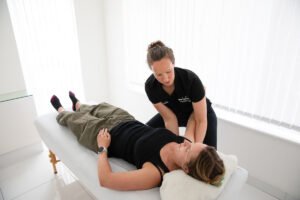
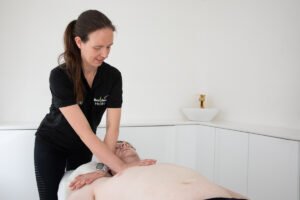
Osteopathy takes a whole-body approach to understanding pain and movement.
Rather than simply focusing on where you feel discomfort, we look at how your entire body is functioning and whether there are areas that aren’t moving as well as they could be.
Treatment may include:
- Gentle hands-on techniques to improve joint mobility
- Releasing muscle tension and tightness
- Improving movement through the spine, shoulders and hips
- Advice on workstation setup and posture
- Exercises and stretches tailored to your needs
The goal isn’t just to help reduce pain today- it’s to help you feel stronger, move better, and support your recovery long term.
Simple Posture Tips for Desk Workers
You don’t need to sit perfectly all day. In fact, that’s neither realistic nor necessary.
Instead, aim for a comfortable setup that allows you to change position regularly.
1. Keep Your Screen at Eye Level
Your screen should be positioned so you don’t have to constantly look down.
If you’re using a laptop, consider a laptop stand or external monitor.
2. Sit Back in Your Chair
Try to use the backrest for support rather than perching on the edge of your seat.
Your lower back should feel supported and comfortable.
3. Keep Your Feet Flat on the Floor
Your feet should be supported either by the floor or a footrest.
4. Relax Your Shoulders
Many people unknowingly hold tension in their shoulders while working.
Take a moment every hour to let your shoulders drop away from your ears.
5. Change Position Frequently
This is perhaps the most important tip of all.
Movement is medicine.
Even the best posture can become uncomfortable if you stay in it for hours.
Three Simple Exercises You Can Do During the Work Day
These exercises take less than a minute each and can help reduce stiffness throughout the day.
Chin Tucks
This gentle movement helps counteract the forward-head position many desk workers develop.
How to do it:
- Sit tall
- Gently draw your chin straight backwards
- Hold for 2-3 seconds
- Repeat 10 times
Shoulder Rolls
A great way to reduce tension around the neck and shoulders.
How to do it:
- Roll your shoulders backwards in a smooth circular motion
- Repeat 10 times
- Then roll forwards 10 times
Standing Hip Stretch
Sitting for long periods can leave the front of the hips feeling tight.
How to do it:
- Stand up from your desk
- Take a small step backwards with one leg
- Gently tuck your pelvis underneath you
- Hold for 20-30 seconds each side
The 30-Second Rule
One of the simplest habits you can introduce is to move every 30-60 minutes.
You don’t need a full workout.
Simply:
- Stand up
- Walk to get a drink
- Stretch your arms overhead
- Walk around the office
These small movement breaks can make a significant difference over the course of a working day.
Small Changes Can Make a Big Difference
Many desk workers assume that aches and pains are simply part of the job.
They don’t have to be.
Making small adjustments to your workstation, moving more regularly, and addressing problems early can help prevent discomfort from becoming a longer-term issue.
Remember, movement is medicine.
The more opportunities you can give your body to move throughout the day, the better it tends to feel.
Need Some Help?
If you’re struggling with neck pain, back pain, headaches, shoulder tension, or other desk-related aches and pains, osteopathy may be able to help.
At Banstead Health Hub clinic, we help desk workers understand what’s contributing to their symptoms and create a practical plan to help them move freely, feel stronger, and stay active.
If you’d like to find out whether osteopathy could help you, feel free to get in touch. We’re always happy to answer questions and support your recovery. Or you can book in with us through this link bit.ly/bhhdiary